

The forests of the Congo Basin are one of the planet’s main reservoirs of biodiversity and play a central role in regulating the global climate. The Democratic Republic of the Congo is home to the largest share, with approximately 145 million hectares of forest and nearly 40 gigatons of carbon stored in biomass. These ecosystems play an essential role in stabilizing the climate, protecting biodiversity, and sustaining the livelihoods of millions of Congolese people, particularly in rural areas. Local communities derive a large portion of their food, energy, and medicinal resources directly from the forest. However, these ecosystems are under increasing pressure. Agricultural expansion, logging, wood-energy production, mining activities, and infrastructure development are rapidly transforming forest landscapes. These changes affect ecological balances as well as local economies and cultural practices linked to the forest. Despite the existence of a legal framework and significant international commitments, particularly regarding climate and conservation, the gap between stated ambitions and their actual implementation remains significant.
EcoAct-Congo conducts research on forest governance, deforestation dynamics, and climate policies in the Democratic Republic of the Congo. The network analyzes the territorial impacts of forest concessions, infrastructure projects, and conservation initiatives, as well as their implications for local livelihoods. Our work also focuses on international mechanisms related to forest protection, particularly climate policies and conservation financing mechanisms. By documenting the social and environmental impacts of forest transformations, EcoAct-Congo helps inform debates on the conditions for forest management that can reconcile ecosystem protection, environmental justice, and territorial development.
EcoAct-Congo addresses forests and climate change through a political ecology approach that focuses on the interactions between environmental dynamics, institutions, economic actors, and local communities. The network analyzes public policies, legal instruments, climate finance mechanisms, and territorial dynamics that shape the management of forest areas. Our approach is also grounded in knowledge generated from the field. In many forested areas, environmental changes are evident in shifting landscapes, access to natural resources, and people’s ways of life. EcoAct-Congo therefore pays particular attention to the rights of local communities and Indigenous peoples, local knowledge, and the conditions under which communities participate in conservation and climate change mitigation policies.

| Project on Development Corridors in the DRC | Read More |
| Anthropocene | Read More |
Latest news
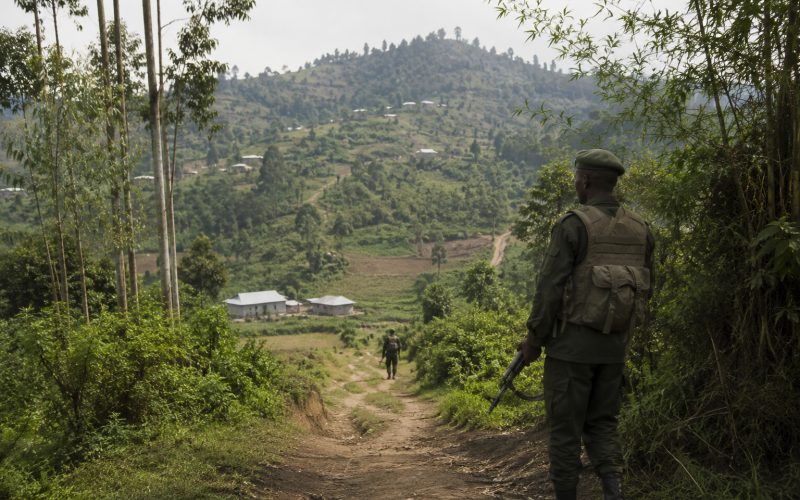
In several territories in the east of the Democratic Republic of the Congo affected by armed conflict, environmental organisations are warning of wors...